Bruner Chrysler Dodge Jeep Ram

Blog / Parts and Service

Keeping Your RAM Truck Correct: Why Genuine Parts Still Matter

Order RAM Parts in Stephenville, TX - Bruner Chrysler Dodge Jeep Ram
A RAM truck is not just a tool for work. It is a carefully engineered machine designed to balance strength, durability, and everyday usability. Maintaining that balance over time depends heavily on what you choose to replace it with.Ordering genuine parts for your RAM truck is less about preference and more about preserving the vehicle exactly as it was intended. For drivers in Stephenville, TX, and across Erath County, that distinction becomes increasingly important the longer you plan to keep your truck.

Engineered Consistency: Why OEM Parts Hold the Advantage 

Genuine RAM components are built to the same standards as the originals fitted at the factory. That means precise tolerances, predictable performance, and long-term durability that aligns with the rest of the vehicle. Aftermarket alternatives can serve a purpose, but they are rarely engineered with the same level of integration. Over time, even small inconsistencies can affect ride quality, drivetrain behavior, or overall reliability. For trucks like the RAM 1500, 2500, or 3500, where capability is central to their identity, maintaining that engineering consistency is essential.

One Platform, Many Personalities: Why Specification Matters 

The RAM lineup is broad by design. A RAM 1500 built for daily driving, a RAM 2500 Power Wagon configured for off-road work, and a RAM 3500 Chassis Cab intended for heavy-duty applications all require distinctly different components. Even within a single model line, trim levels and powertrains introduce further variation. This is where accuracy becomes critical. A component suited to one configuration may be entirely inappropriate for another, despite appearing identical at first glance. Exploring available RAM truck inventory or reviewing model specifications online can help clarify how these differences apply to your specific vehicle.

Start With the VIN: Precision Before Purchase 

If there is one detail worth getting right at the outset, it is the VIN. This number defines your truck completely, from engine configuration to installed options. Providing it when ordering parts removes uncertainty and ensures that what you receive is correct the first time. Whether you are ordering through an online parts portal or speaking directly with our dealership parts department, the VIN is your most reliable reference point.

Where Stephenville Owners Turn for Genuine RAM Parts 

For RAM owners in Stephenville and nearby communities, working with an authorized dealership remains the most dependable route. A dedicated parts department offers direct access to OEM components, along with the expertise to confirm compatibility and advise on installation. That combination of supply and knowledge is difficult to replicate through general retailers. Most dealerships also provide online parts ordering tools, allowing you to begin the process from home before confirming details with the team. At the same time, you can explore financing options or browse available RAM models if you are considering a broader upgrade.

Installation and Ongoing Care: Completing the Process 

Fitting the correct part is only part of the equation. Installing it correctly ensures the vehicle continues to perform as designed. For more involved systems, scheduling service with a certified technician is often the most sensible choice. This ensures that components are installed to manufacturer standards and that any related systems are properly checked at the same time. Routine maintenance, inspections, and service scheduling all play a role in maintaining long-term reliability. Keeping these elements connected through a single dealership simplifies ownership considerably.

Preserving Capability on Texas Roads and Beyond 

From daily driving in Stephenville to hauling across Hico, a RAM truck is built to adapt. Using genuine parts ensures that adaptability remains intact. It keeps the suspension composed under load, the drivetrain responsive under pressure, and the vehicle consistent across changing conditions. It is, in essence, about preserving what makes the truck effective in the first place.

A Practical Starting Point in Stephenville, TX 

When it comes time to order genuine parts for your RAM truck, having a trusted local resource simplifies the process. The team here in Stephenville offers access to OEM parts, service scheduling, financing support, and current RAM vehicle inventory in one place. You can begin by exploring parts availability online, booking a service appointment, or reviewing your options for a future upgrade. And when the time comes, schedule a test drive online and experience how a properly maintained RAM should feel.

Posted in:

Related Posts

Chrysler Brake Service in Stephenville, TX - Bruner Chrysler Dodge Jeep Ram

3 Signs Your Chrysler Needs a Brake Repair

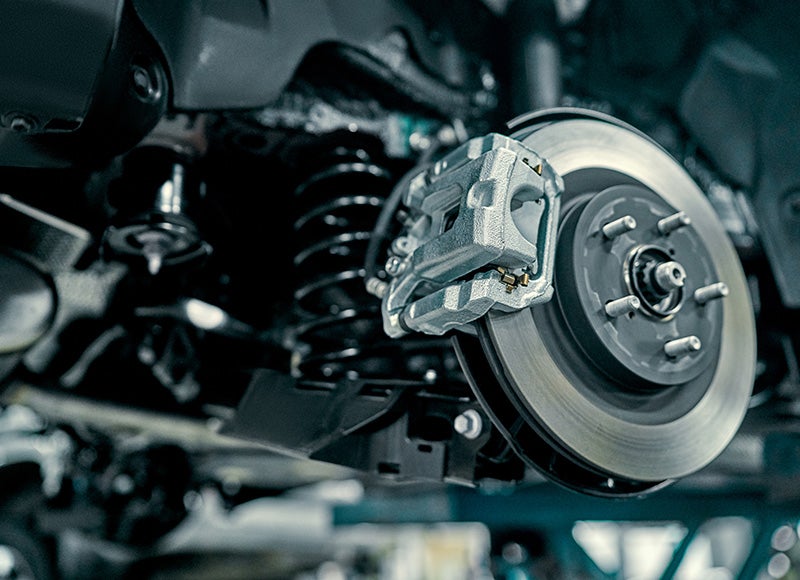
Worn or damaged brakes make driving dangerous as they prevent the brakes from working effectively. Braking responsiveness decreases and braking distance increases and this can cause an accident. As your Chrysler dealership, we want you to know some signs you need to visit us for a brake repair. more Illuminated Brake Light The brake warning light on your dash illuminates if there's a problem with your brakes or if your handbrake is still engaged. Sensors are connected to the brake components and monitor them for signs of trouble. If something goes wrong, the relevant sensor informs your computer. The computer logs the issue with an error code and illuminates the warning light. If the brake is released and the light remains on, something is wrong with your braking system. You might have low brake fluid due to a leak, or the brake pads could be worn and need replacement. The light could also signal a more serious issue like the failure of the brake master cylinder, the component that controls your brakes. Once we find and fix the problem, the light will go out. Vibrations When Braking A healthy braking system will quickly and smoothly bring your vehicle to a halt. If you feel strange vibrations through the pedal when you hit the brakes, something is wrong. A major cause of this problem is an irregular rotor surface. The rotors are the smooth, flat disks positioned behind the wheels, and the calipers grip the rotors when you apply the brakes to force them to stop moving. Braking generates heat, and this can cause brake pad adhesive to liquefy. The adhesive will spread across the rotor and dry on its hot surface. As time passes and more adhesive dries on the rotor, it creates an irregular surface. When a caliper grabs the irregular surface, you'll feel the vibrations it causes. We fix this issue by cleaning or resurfacing the affected rotor to turn its surface smooth again. Burning Chemical Smell Brake fluid becomes less effective as it ages, and it needs regular replacement. Older fluid will also absorb water, and this can cause braking problems. As we saw above, braking generates heat. If you have to brake frequently over a short distance, for example, driving downhill, high temperatures can cause the water in the fluid to overheat. The brake fluid won't burn, but the boiling water inside overheats the fluid. Hot brake fluid can't generate the hydraulic power necessary to force the brakes to engage, and your brakes could fail. We'll drain and replace the old fluid to fix this problem. If you have a brake problem, visit our expert technicians today at Bruner Chrysler Dodge Jeep Ram in Stephenville, TX.

How to Install an AC Power Inverter in a Dodge Ram 1500

Installing an AC power inverter in your Dodge Ram 1500 can enhance your vehicle’s utility, allowing you to power electronic devices directly from your truck. Whether for work tools, camping gear, or emergency equipment, an inverter transforms your Ram into a mobile power source. Here’s a step-by-step guide to installing a factory inverter or aftermarket AC power inverter in a Dodge Ram 1500. Step 1: Choose the Right Inverter Before installation, select an inverter that meets your power needs. For simple electronics like laptops or small appliances, a 300 to 500-watt inverter might suffice. For higher power demands, consider a model up to 2000 watts. Ensure the inverter is compatible with the electrical system of a Dodge Ram 1500. Step 2: Prepare the Installation Site The best location for an inverter is close to the battery to minimize voltage drop in the wiring. A common spot is under the passenger seat or in the cab’s rear, depending on your truck’s configuration and space availability. Step 3: Install the Inverter Disconnect the Battery: Before starting, disconnect the battery to prevent any electrical shorts or accidents. Mount the Inverter: Secure the inverter using brackets or a mounting kit. Ensure it is firmly attached and the vent areas are not obstructed. Wire the Inverter: Run the power cables from the inverter’s positive and negative terminals directly to the corresponding battery terminals. Use thick gauge cables suitable for the wattage of your inverter and the distance from the battery. Ground the Inverter: Connect a grounding cable from the inverter to the truck’s chassis. This is crucial for safety and the proper functioning of the inverter. Install a Fuse: Place an inline fuse on the positive cable as close to the battery as possible. This protects the inverter and your vehicle in case of an electrical overload. Step 4: Test the Installation Once everything is connected and secured, reconnect the battery. Turn on the inverter and test it with a small appliance to verify it’s working correctly. Check for any unusual noises, overheating, or electrical issues. Step 5: Secure the Wiring Secure all wiring with cable ties or clamps, ensuring nothing is loose or in danger of being damaged during vehicle operation. Keep cables away from sharp edges and heat sources. Installing an AC power inverter in your Dodge Ram 1500 is a practical upgrade that boosts the functionality of your vehicle. By following these steps, you can safely install either a factory inverter or an aftermarket model, providing reliable power on the go. Always refer to the inverter’s manual and your Dodge Ram’s specifications for detailed instructions and safety information. If you're not comfortable performing the installation yourself, consider visiting our Ram service center. They can provide professional installation services to ensure everything is set up correctly and safely. Additional Reading: How and When to Change Your Oil

Do You Need An Oil Change?

How and When to Change Your Oil

When it comes to car maintenance, changing your oil is one of the most fundamental things you can do to make sure your car goes the distance. Most retailers and quick-change shops will recommend that on average, a car's oil should be changed approximately every 3,000 miles or every three months, whichever comes first. While that can be a good general principle to adhere to, there are several variables to take into consideration when deciding how often you should change your car's oil. Average driving distance, engine temperature and whether your oil is conventional or synthetic can all have an impact on how often you get an oil change and what kind of oil you use. Here are a few things to think about before you invest the time and money needed to keep your car at peak performance with an oil change. more Driving Distance Although the standard is 3,000 miles or three months, the frequency and distance with which you drive could impact those benchmarks significantly. Some owner's manuals suggest getting your oil changed every 5,000-7,500 miles or every six months, and still other modern makes recommend an oil change every 10,000-15,000 miles or once a year, especially if they use a synthetic oil (more on that later). On the lower end, there may also be some vehicles that would benefit from an oil change every 1,000 miles, however often that is. The reason for the wide variation has much to do with how far you drive your car when you get in and go. Though it may seem counterintuitive, drivers who travel an average of under 10 miles per trip will likely need to get their oil changed more often, as short-range distances do not afford your engine enough time to warm up to a sufficiently high temperature to burn off condensation, which causes your oil to break down faster. This sort of short-range driving also typically requires more stopping and starting, which places more stress on the engine and oil. Those who find themselves driving longer distances at a more uniform speed (like on the highway) will put less stress on their engine, and may be able to stretch the 3,000 mile standard to the 5,000-7,500 mile/every-six-month range. Conventional, Synthetic or Blended Vehicles that use conventional oil are less likely to be able to go without an oil change for up to 10,000-15,000 miles than synthetic oils. The higher refinement grade and improved molecular structure of synthetic oils bring multiple benefits to your car, including: Fewer emissions Better fuel and oil economy Decreased engine wear as a result of less friction Reduced engine drag due to decreased oil thickening More uniform performance Superior endurance under extreme temperatures Less engine sludge and greater deposit removal Add to the list the fact that some extended performance synthetic oils only need to be changed every 15,000 miles or once a year, and the benefit of synthetic oil changes for your car becomes evident. It's true that synthetic oil can cost 6-10 times more than conventional oils, but the reduced number of oil changes may easily offset the cost. As an added benefit, synthetic oils are also more environmentally friendly, and for those concerned about the planet any extra cost may be well worth it. If you don't need the most premium synthetic oil on the market and would like something more affordable but still possessing some of the improved lubrication properties of a synthetic oil, blended oil options combining synthetic and conventional oils can also go a long way in reducing your oil change frequency. You may not get 15,000 miles out of each oil change, but 7,500-10,000 can be a reasonable expectation depending on the model. When to Change Most cars today have electronic oil monitoring systems that notify the driver when an oil change is needed. Nevertheless, a classic dipstick check is always helpful in determining if you need to add more oil or need an oil change. If you're uncertain if you have an electronic oil monitoring system or should just check your oil using your dipstick, your owner's manual can provide you with that information. If you do check it manually, here are a few things to look for: If the oil level doesn't reach the last line of the dipstick, you probably need to add more oil even if you don't need an oil change. If it doesn't reach any of the lines, you likely need to add at least one quart. Examine the color of the oil, as it should be a glossy, nearly transparent brown color. If it has a thick, sludgy consistency, you need an oil change. (Another symptom: take note if the oil smells odd, as some oils omit a rotten cheese-like odor when they need changed.) While you're examining your oil, make sure it doesn't have a milky appearance or consistency to it, as this can be a sign that it has mixed with your coolant, and you may have a blown gasket or other more serious issue. If this is the case, take it to your trusted mechanic immediately! If you're going to take your car in for an oil change, a filter replacement and multi-point inspection would likely be a good idea too. Vehicle maintenance is a must for keeping your car up and running, and can save you thousands in repairs that could have been avoided. Don't get stranded from poor vehicle maintenance; get the most out of your oil, and let our certified technicians give your Dodge, Jeep, Chrysler, Fiat or RAM the affordable service you need for your car to conquer the road!